Wellness, made more useful through intelligent systems.
Global Wellness AI helps organizations deliver branded, evolving wellness experiences—automatically. One platform can support guests, residents, members, employees and communities across the places where life happens.
One shared intelligence and delivery platform. Multiple environments.
1 platformShared automation infrastructure
24+Launch experiences and growing
MonthlyNew value for subscribers
AlphaAdvanced systems research
Explore the platform by environment
One wellness platform. Ten adaptable editions.
Choose an edition to see who it serves, where it fits and how approved content, branding and responsible AI can adapt. Hospitality is active; every other edition is presented transparently as a preview or development direction.
Available first
Hospitality Edition
For resorts, hotels, spas and retreats that want useful wellness touchpoints throughout the guest journey—without adding staff-intensive programming.
A branded QR card introduces a two-minute arrival reset and the property wellness library.
02Amenity orientation
Residents discover short experiences matched to the garden, lounge and fitness spaces.
03Quiet evening
An optional wind-down experience appears in the resident app or a shared-space display.
04Community connection
A monthly campaign offers a low-pressure shared prompt without exposing individual choices.
Move-in QR cardAmenity guideResident app collectionMonthly campaignAggregate summary
Preview only · AI would organize approved content by setting, duration and stated preference—not health profiles. Subscription enrollment is not yet open.
Concept preview
Workplace Edition
Short, accessible resets for offices, coworking environments and distributed teams—with no employer access to individual selections.
Where it fitsDesk breaks, meeting transitions, shared spaces, remote work and leadership events.
Automated valueMonthly team calendars, display assets and privacy-conscious aggregate summaries.
A two-minute transition helps people choose how to begin without measuring performance.
02Between meetings
A shared QR point offers quiet, movement or screen-free options for the time available.
03Afternoon pause
Remote and onsite teams can access the same approved short-form experience library.
04End-of-day transition
A closing prompt supports separation from work while keeping individual choices private.
Desk QR cardShared-space displayRemote-team linkMonthly calendarPrivacy-safe summary
Preview only · The employer would not receive individual selections, inferred emotions or personal wellness profiles. Subscription enrollment is not yet open.
Coming next
Fitness & Recovery Edition
For gyms, studios, clubs and general-wellness recovery spaces extending value before and after activity without clinical or treatment claims.
Where it fitsStudios, locker rooms, recovery lounges, member apps and outdoor recreation settings.
Automated valueMember campaigns, QR stations, accessible experience formats and recurring education collections.
A short user-chosen pause helps members transition into general activity without scoring readiness.
02Choose gentle mobility
Standard and seated-friendly options support participant choice rather than prescribing movement.
03Recovery pause
An audio-free or low-bandwidth guide offers a quiet transition after general activity.
04Reflect and reset
A simple closing prompt supports continued engagement without measuring performance or outcomes.
Entrance QR cardMember-app collectionRecovery-space displayMonthly education releaseAggregate summary
Preview only · General wellness content does not assess injury, prescribe rehabilitation or replace professional care. Subscription enrollment is not yet open.
In development
Travel Edition
Short, accessible transition experiences for passengers, crews and travelers in waiting, in-transit and arrival environments.
Where it fitsLounges, terminals, passenger apps, arrival areas and delay periods.
Automated valueDestination collections, display campaigns, seated-friendly formats and low-bandwidth access.
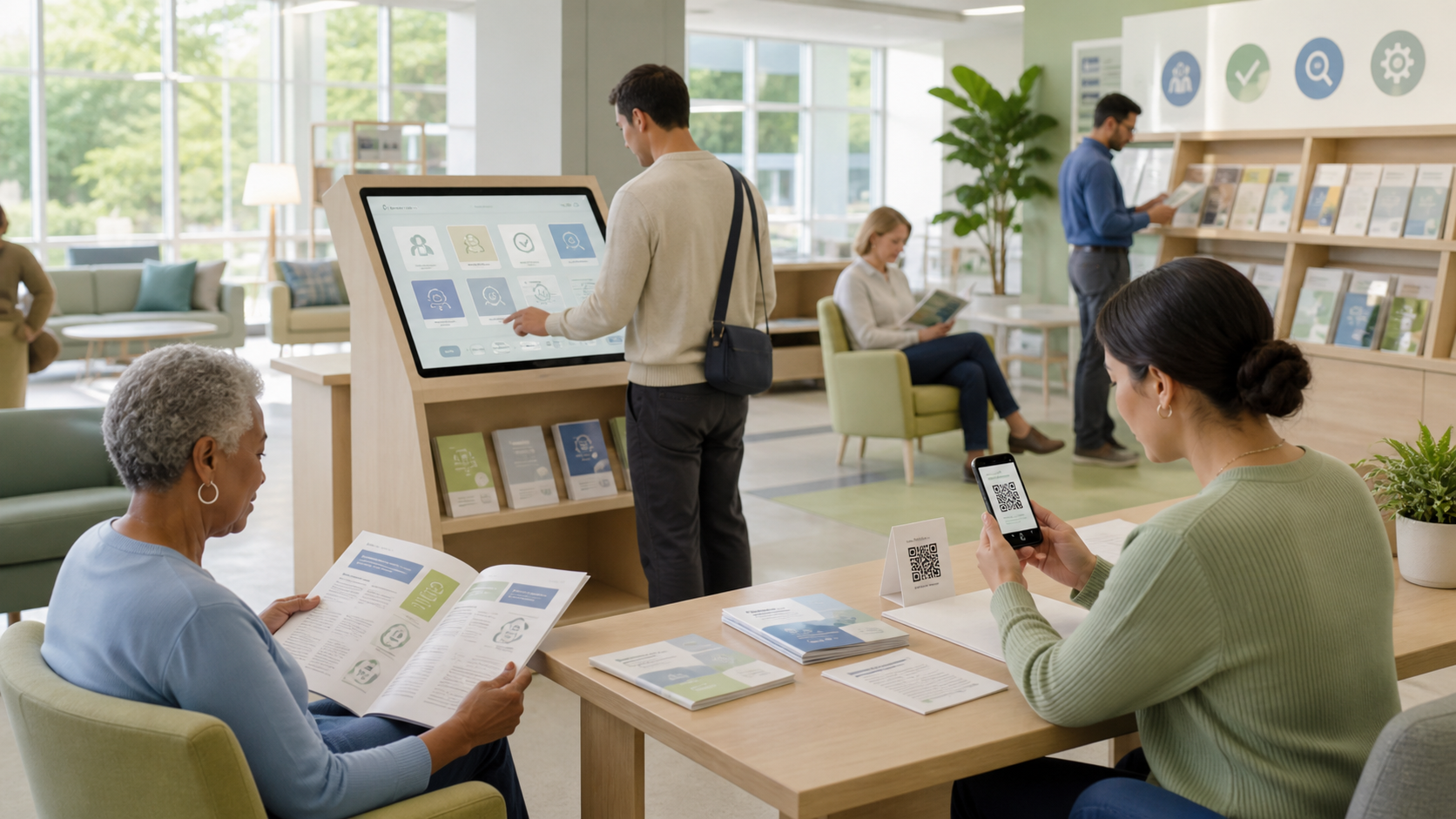
Illustrative Travel Edition environment · Development preview
See a traveler journey in action
01Orient to the wait
A short lounge or terminal prompt helps travelers notice the time and space available without assessing stress.
02Choose a seated reset
Travelers can select quiet attention or comfortable optional movement suited to constrained spaces.
03Prepare to transition
A low-bandwidth guide supports the shift from waiting to boarding, departure or arrival.
04Arrive in place
A destination collection introduces a simple place-based pause without promising sleep or health outcomes.
Lounge QR cardPassenger-app linkSeated-friendly guideDestination collectionLow-bandwidth text
Preview only · This edition does not assess anxiety, fatigue, sleep, fitness to travel or individual health. Subscription enrollment is not yet open.
Governed development
Senior Living Edition
Accessible, choice-led engagement for older adults, families and staff-supported community settings—designed around dignity, participation and social connection.
Where it fitsPrivate rooms, shared lounges, gardens, activity programs and family visits.
Automated valueLarge-print assets, audio-free and seated-friendly formats, staff display mode and recurring accessible collections.
Illustrative Senior Living Edition environment · Governed-development preview
See a community journey in action
01Choose the format
A resident selects large print, audio-free, seated-friendly or supported display without being scored or profiled.
02Notice the garden
A short place-based prompt invites attention to light, color or a nearby natural detail.
03Create or connect
Residents may choose a simple reflection or an optional conversation prompt with family or neighbors.
04Close by choice
The experience ends without testing memory, mobility, cognition or participation.
Large-print cardSeated-friendly guideStaff display modeFamily-visit promptLow-bandwidth text
Preview only · No cognitive, mobility, clinical or healthy-aging outcome claims. Deployment requires accessibility review and clear participant choice. Subscription enrollment is not yet open.
Governed development
Education Edition
Wellness literacy and transition support for universities, adult learning environments, faculty and staff. Any future youth use remains outside this preview and requires separate safeguarding review.
Where it fitsUniversity libraries, student centers, adult classrooms, residence halls and staff spaces.
Automated valueOrientation kits, campus calendars, quiet-space QR assets, accessible resources and low-bandwidth study transitions.
A learner chooses a short transition without sharing a grade, diagnosis, mood or performance goal.
02Take a screen pause
An audio-free or seated-friendly option supports a brief change in attention and position.
03Choose the next task
A simple prompt helps the learner name one next action without scoring focus or productivity.
04Close the session
The experience ends with a user-controlled transition and no academic or wellbeing assessment.
Library QR cardOrientation kitAdult learner guideFaculty/staff resourceLow-bandwidth text
Preview only · Adult higher education first. No academic scoring, mental-health assessment or youth deployment is included. Subscription enrollment is not yet open.
In development
Community Wellness Edition
Low-bandwidth, multilingual-ready and locally adaptable general-wellness resources for nonprofits, libraries, community programs and public gathering places.
Where it fitsCommunity centers, libraries, public events, volunteer programs and virtual access.
Automated valuePrintable kits, low-bandwidth experiences, accessible QR resources and governed local-language variants.
Illustrative Community Wellness Edition environment · Development preview
See a community access journey in action
01Find an accessible format
A visitor chooses print, low-bandwidth text, audio-free or large-display access without creating a profile.
02Pause in a shared place
A brief neutral prompt invites attention to one comfortable nearby detail while respecting the public setting.
03Choose quiet or connection
The participant may continue independently or use an optional conversation prompt with someone nearby.
04Find local resources
Organizations may add reviewed local links separately from the general-wellness experience.
Printable access cardLibrary QRLow-bandwidth textAccessible displayGoverned language variant
Preview only · No community is treated as culturally uniform. Translation, local adaptation and resource links require appropriate human review. Subscription enrollment is not yet open.
In development
Caregiver Support Edition
Short, choice-led general-wellness moments for unpaid caregivers, families and support staff across home, waiting and community settings.
Where it fitsHome, waiting areas, family-resource centers, community programs and private virtual access.
Illustrative Caregiver Support Edition environment · Development preview
See a caregiver-support journey in action
01Find two minutes
A caregiver opens a print or low-bandwidth resource without creating an account or explaining their situation.
02Choose one pause
The participant may rest attention, change position comfortably or remain still while staying aware of real responsibilities.
03Name one next need
A neutral prompt supports one user-chosen practical next step without assessing strain, mood or capacity.
04Return without a score
The experience closes without claiming relief, measuring resilience or evaluating caregiving performance.
Two-minute cardWaiting-area QRPrivate mobile linkLow-bandwidth textSupport-theme release
Preview only · Not crisis support, diagnosis, counseling or a replacement for professional, emergency or respite services. Subscription enrollment is not yet open.
Future governed edition
Public Health & Wellness Education
Reviewed wellness literacy and source-navigation resources for public portals, libraries, educational campaigns and community partners—designed as transparent education, not an active public-health or medical service.
Where it fitsPublic portals, libraries, community education and public-facing campaigns.
Automated valueVersioned collections with visible source, date, jurisdiction and trust labels; accessible and low-bandwidth formats; and a correction route.
Illustrative Public Health & Wellness Education environment · Future governed preview
See a public wellness-literacy journey in action
01Find the source
A reader identifies the author or organization responsible for a general-wellness resource.
02Check date and jurisdiction
The reader checks when the resource was reviewed and where its guidance is intended to apply.
03Separate information from a claim
A neutral prompt distinguishes general information from a promised outcome that needs stronger evidence and review.
04Use the correction or referral route
The resource makes its source, correction path and appropriate next-step options easy to find without directing care.
Future governed preview only · No diagnosis, treatment, public-health instruction or claim validation. Any release requires jurisdictional, claim, accessibility and privacy review.
Compare the editions
Find the environment that matches your organization.
Every edition uses the same platform core. What changes is the setting, approved content, delivery assets and level of governance required.
Edition
Status
Best fit
Signature moments
Automated value
Next step
Available first
Hotels, resorts, spas, retreats
Arrival, treatment transition, poolside, evening
Branded QR assets, launch kits, monthly guest collections
Versioned public collections, corrections, trust labels
Edition interest does not create a subscription or start billing. It only asks Global Wellness to keep you informed about that edition.
See the AI layer at work
A transparent recommendation—not a hidden wellness score.
Choose only the environment, moment, time and delivery preference. The demonstration returns an approved experience and explains its reasoning. It does not diagnose, infer emotion or build a personal health profile.
Interactive demonstration
What would be useful now?
These selections stay in your browser and are not submitted.
Navigator result
Arrival Reset
A short orientation experience that helps a hospitality guest transition into the property.
Hospitality2 minutesStandard visual guide
Why this appeared
You selected Hospitality, an arrival moment and about two minutes.
How it could be delivered
A branded room card, arrival-message link or lobby QR point.
Not used: diagnosis, symptoms, biometrics, inferred emotion, employee performance or individual health history.
The AI is the operating layer
More than a chatbot. A continuously improving service.
AI helps organize, adapt, brand, localize and deliver approved wellness experiences. It gives subscription clients new reasons to return while reducing the work required to run the program.
Subscribers are not buying a static download folder. They are activating a managed wellness channel that receives new content, new branded materials and better guidance over time.
01
Activate
Enrollment and automated onboarding will open after secure billing activation.
02
Brand
Approved property information flows into controlled templates.
03
Deliver
QR materials and digital experiences reach the places people use them.
04
Expand
New collections, campaigns and recommendations increase ongoing value.
Available first
Hospitality Edition
Short, self-guided experiences designed for the rhythm of a guest stay—from arrival and treatment transitions to poolside pauses and evening wind-down.
Guest Reset Collection
Help guests arrive.
Breathing, travel-tension, treatment preparation and quiet transition experiences.
Delivery optionsDigital signage · TV or kiosk mode · Branded audio
Platform optionsWhite label · API integrations · Portfolio administration
Hospitality Edition · subscription plans
Start with one location. Expand when ready.
Subscriptions will open after secure billing activation is complete. Review the plans now and return when enrollment opens—delivery is designed to remain automated and self-service.
Useful experiences now. Expansive technology over time.
The subscription platform is the practical beginning. Global Wellness Labs continues exploring immersive, volumetric and distributed-intelligence infrastructure for future wellness, research and carefully governed medical applications.
Begin with what is available
Bring useful wellness moments into your property.
Explore the complimentary library, review the active Hospitality Edition, or ask the Global Wellness Guide about access and plans.